Read the incident response case study →
The breach was the catalyst. The real story is what happened afterward: how centralized IT ownership replaced fragmented support, and how that shift improved security, reliability, and daily operations.
Before Managed IT: Fragmented Support With No Clear Owner
Prior to the incident, the company’s IT environment looked like many growing small businesses.
Hardware was purchased from one vendor. Software licenses were renewed elsewhere. Individual tools had their own support channels. There was no single party responsible for understanding how everything fit together — or for noticing when gaps formed between systems.
Day to day, this setup felt workable. Issues were handled as they appeared. But when the breach occurred, it became clear that no one was overseeing the full operational picture.
The Shift: One Accountable Partner for the Entire Environment
After the incident response phase, the company made a deliberate decision to move into managed IT ownership rather than return to the previous patchwork model.
Ownership, in this context, did not mean more tools or more complexity. It meant having one team responsible for understanding the entire environment — systems, users, access, and operational dependencies — and for continuously maintaining that baseline.
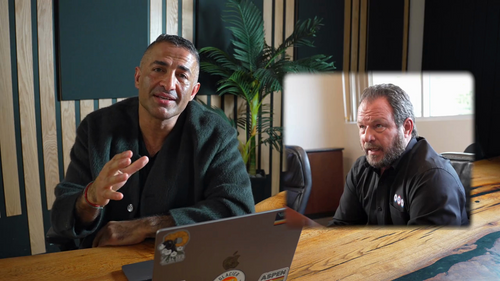
“You have a lot of single companies doing a lot of things. You don’t have anybody overseeing the total operation.”
— Scott, business owner
Managed IT replaced that fragmentation with continuity and accountability.
How Ongoing IT Support Changed Daily Operations
One of the most immediate changes was how everyday issues were handled.
Previously, technical problems often stalled internal staff while different vendors were contacted. Now, issues route through a single support channel with clear escalation paths and fast acknowledgment.
Response times improved dramatically, but more importantly, interruptions became shorter and more predictable — reducing friction for employees and management alike.
Security as a Continuous Operation, Not a One-Time Project
Post-incident, security was no longer treated as a separate initiative or annual checklist.
With managed IT in place, monitoring and oversight became part of daily operations. Abnormal activity could be identified during execution — not after damage was done.
This continuous visibility is what allows potential issues to be interrupted mid-stream rather than discovered weeks later.
Real-Time IT Support for Revenue-Critical Field Teams
The company employs dozens of field technicians who rely on email, mobile devices, and applications to perform work and bill customers.
When access issues occur, technicians no longer escalate problems internally or wait days for resolution. They contact IT directly and continue working once the issue is resolved.
Faster resolution translates directly into sustained productivity and uninterrupted revenue flow.
From Reactive to Proactive: Catching Issues Before Damage Occurs
The most meaningful shift was moving from reaction to anticipation.
With continuous oversight, abnormal behavior could be evaluated in real time. When activity didn’t match normal patterns, it was investigated immediately — preventing escalation.
This level of protection is only possible when IT is treated as an operational system rather than a collection of tools.
Outcome: A More Stable, Efficient, and Secure Business
Since transitioning to managed IT, the business operates with fewer interruptions, clearer accountability, and significantly reduced exposure to risk.
IT is no longer a background concern — it is an enabling function that supports growth, protects revenue, and reduces uncertainty.