When the First Sign of a Breach Comes From the Bank
The incident did not begin with an internal alert. It began with a phone call.
The business owner’s wife received a call from their bank asking to confirm an $85,000 wire transfer. It was not a transaction the company typically made. The bank had all the correct credentials and verification details, but something about the request felt unusual.
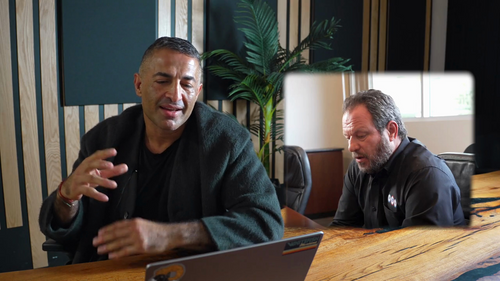
“We got a call from our bank… we have a good personal relationship with our bank… we have each other’s cell phones.”
— Scott, COO of Reliable Plant Maintainance
This call was the first visible indication that someone had already gained access to sensitive systems. For many small businesses, this is how breaches are discovered — not through detection tools, but through external institutions noticing abnormal behavior.
What Was Compromised and How Access Spread
Once the situation was examined more closely, it became clear this was not a single-account issue.
The attacker had gained access to company email and began extracting information from internal communications. From there, [the attackers] were able to locate password lists, monitor conversations, and attempt to intercept verification messages.
“We think that… we were passing information on through our emails. Well, [the attackers] got into our emails and that’s where it started.”
— Scott, COO of Reliable Plant Maintainance
This type of access allows threat actors to move quietly. When attackers can read emails and reuse legitimate credentials, they can blend in long enough to prepare financial transactions or escalate further.
The Moment It Became Clear This Was Beyond Internal Capabilities
Like many small businesses, the company had various forms of IT support in place. What they did not have was a single party overseeing the entire environment.
As the scope of the intrusion became clearer, the owner realized the situation had moved beyond what the internal team could safely handle.
“At that point we knew we had a problem that was outside of our abilities to handle.”
— Scott, COO of Reliable Plant Maintainance
Containment First: Disconnecting From the Internet
The first priority was stopping further access.
The business was instructed to disconnect systems from the internet immediately. This step is disruptive, but it prevents attackers from continuing to move laterally while response work begins.
“[Fornida] was on the phone with us late one evening… and they were here first thing the next morning.”
— Scott, COO of Reliable Plant Maintainance
Response planning started the same night the issue was identified. On-site work began the following morning.
What Incident Response Looked Like in Practice
The response did not happen overnight.
Email systems were intentionally taken offline for more than a week while the environment was reviewed system by system. Passwords were reset, access paths were closed, and verification was performed to ensure the attacker was fully removed.
“Our emails were shut down for over a week… we had to be so methodical… getting them out of our system and changing out all the passwords.”
— Scott, COO of Reliable Plant Maintainance
This slower, methodical approach reduced the risk of reinfection — a common outcome when businesses reconnect too quickly.
During this phase, Fornida used SentinelOne to confirm devices were clean and Check Point tools to review email access and activity.
Why the Outcome Could Have Been Much Worse
The attempted wire transfer was stopped because the bank flagged it as unusual and made a phone call. In many cases, that call never happens.
“If that would’ve been a bigger bank that didn’t know us on a personal level, [the attackers] would’ve gotten the money.”
— Scott, COO of Reliable Plant Maintainance
The Small Business Reality: Knowing Something Will Eventually Happen
One of the most telling parts of the owner’s perspective was how familiar it is to many growing businesses.
“We had an understanding that that day was coming… but you try to push it out. It’s more cost. You try to push it out for as long as you can.”
— Scott, COO of Reliable Plant Maintainance
As companies grow, responsibility often becomes fragmented across vendors and tools. Without centralized oversight, gaps form — and those gaps are what attackers exploit.
Outcome and Next Steps
The business safely regained control of its systems after approximately one week of focused incident response and later continued working with Fornida as a Managed IT provider.
Read the follow-up case study on ongoing Managed IT support